Story of the Book
In the mid-2000s, as China prepared to host the world for the 2008 Beijing Olympics and international interest in the country was reaching a peak, a producer named Myra Quan identified a gap: dozens of China’s significant cities had virtually no English-language coverage. Her model was straightforward – approach local tourism administrations for sponsorship, commission young writers to travel to these cities as hosted guests, and produce English-language books that could represent these places to an international audience that had no other way to learn about them.
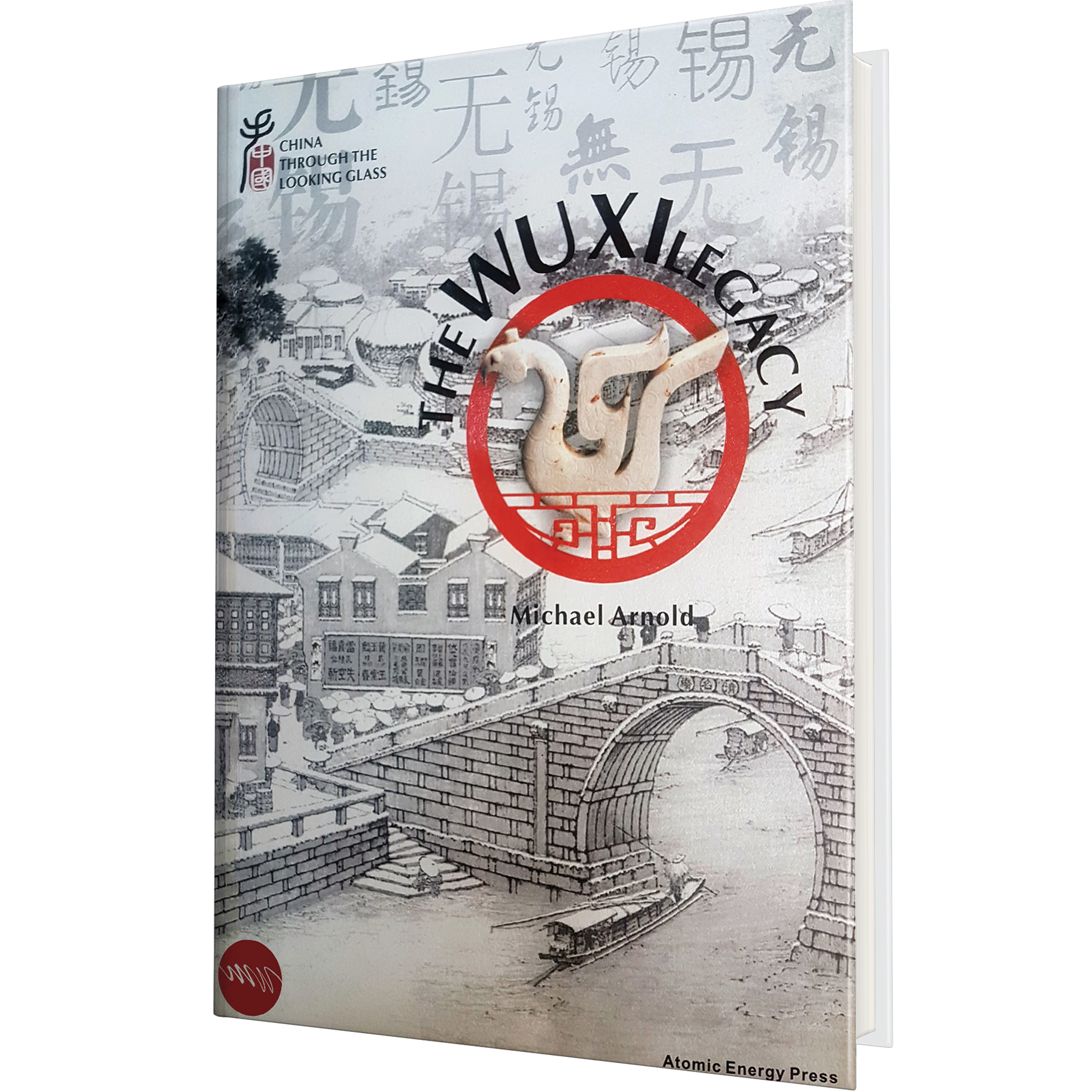
For Michael Arnold, a writer resident in China and building his understanding of the country, the commission to write The Wuxi Legacy was both an education and an early test of a principle that would shape his subsequent career: that a well-written book can establish presence, credibility, and relevance for a place just as effectively as it can for a person. Wuxi – a city on Lake Tai with ancient canals, as well as the Wu cultural legacy that underpins much of modern China’s East Coast prosperity – was the subject. The task was to make a city almost entirely unknown to international readers feel worth the flight.
The book was published by Atomic Energy Press in Beijing in 2007, with editing by Wang Jieping and design by Beijing Matric Culture Communications. The photography is Michael Arnold’s own. It was featured on china.org.cn and reviewed by Owen Grant of China Central Television’s Documentary, who described it as “one of those rare treasures for anyone interested in China.”
A city with no English-language book about it is, for most of the world, a city that doesn’t exist.